
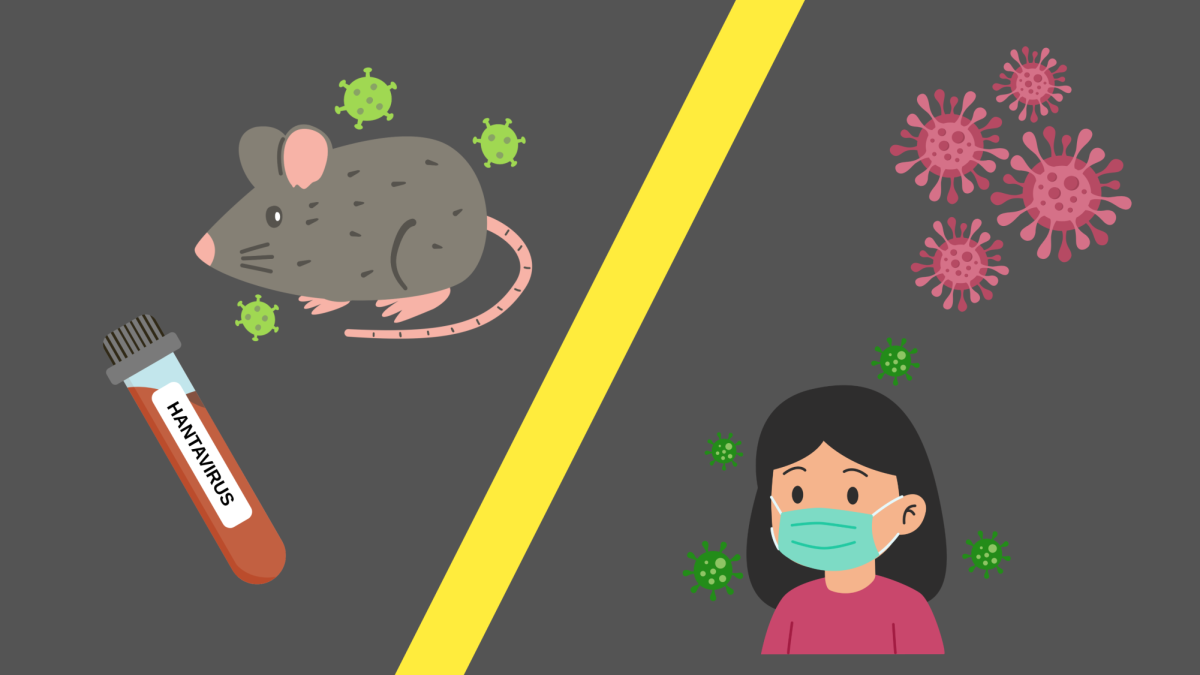




















Almost seven years ago, the world was hit with the COVID-19 pandemic, sending everyone and everything into lockdown. Recently, there’s been an outbreak of a new virus by the name of Hantavirus, with many peoples’ fears of another pandemic on the horizon rising rapidly. Here’s a breakdown of what we know of the Hantavirus and its differences from the infamous Coronavirus.
Background
Hantaviruses are a family of viruses that can cause serious illnesses and death, including hantavirus pulmonary syndrome (HPS) and hemorrhagic fever with renal syndrome (HFRS). The Andes virus is the only type of hantavirus that is known to spread person-to-person and is usually limited to people who have close contact with the ill person, though hantavirus is mainly spread by rodents.
According to the CDC, “people get hantavirus from contact with rodents like rats and mice, especially when exposed to their urine, droppings, and saliva. It can also spread through a bite or scratch by a rodent, but this is rare.”
HPS is the most common in the US and is mainly spread through the deer mouse, meanwhile, HFRS is a group of viruses mostly found in Europe and Asia; though the Seoul virus, which can cause HFRS, is found worldwide.
“The severity of the disease varies depending on the virus causing the infection,” the CDC says, “Hantaan and Dobrava virus infections usually cause severe symptoms where 5-15% of cases are fatal. In contrast, Seoul, Saaremaa, and Puumala virus infections are usually more moderate with less than 1% dying from the disease. Complete recovery can take several weeks to months.”
The world has encountered the hantavirus before, said virus being “named after the Hantan River in South Korea, where the first virus belonging to the family was isolated in 1978.” according to Al Jazeera. Beforehand, the illness was described as the “Korean hemorrhagic fever,” which afflicted 3,000 United Nations soldiers during the Korean War.
A previously unknown group of hantaviruses emerged in the early 1990s in the Four Corners region, where Arizona, New Mexico, Colorado, and Utah meet. According to Al Jazeera, it caused “a severe respiratory illness now known as hantavirus pulmonary syndrome [HPS].”
How it differs from COVID-19
While hantavirus and COVID-19 are both RNA viruses, meaning they use ribonucleic acid as their genetic material instead of DNA, they have key differences.
The main difference is COVID-19 is highly contagious, while hantavirus isn’t as easily transmitted. The easily identifiable spike of the COVID-19 protein is what makes it an easy contagion, but the hantavirus doesn’t have that.
Humans have tiny protein structures called ACE2, which act as a docking port for some viruses. COVID-19 latches onto those receptors and easily replicates itself, mainly in the nose and throat. People can sneeze and cough out some of those replicates and leave them in the air, which can infect another person. Hantavirus latches onto a different receptor than COVID-19 does, located deep in the lungs and inside the lining of blood vessels. If a person infected with hantavirus coughs and sneezes, the droplets may contain the virus, but not enough to spread.
“Additionally, COVID-19 is a positive-sense RNA virus,” Al Jazeera states, “this means that upon entering a human host, it immediately starts to replicate. Hantaviruses are negative-sense RNA viruses, having to go through an extra step to become positive-sense viruses before they can start replicating.”
Furthermore, COVID has a very short intubation period (2-14 days) and is typically better controlled in previously healthy individuals, compared to hantavirus’ 1-8 week intubation period and the severe infections it can cause.
How to avoid it
Since hantavirus is mainly spread through rodents, it’s important to avoid contact with rodent urine, droppings, saliva, and nesting materials.
According to the CDC, “rodent control is the primary strategy for preventing hantavirus pulmonary syndrome (HPS). […] Wild rodents near human populations should be controlled and excluded from homes.” For those with pet rodents, safely caring for them can help prevent HFRS.
Consult a veterinarian or physician if you believe you or your pet may have hantavirus.